Tag: history

  • Wacky Wednesday: The Cursed Submarine

    Wacky Wednesday: The Cursed Submarine

    The H.L. Hunley was the first submarine to ever sink an enemy ship in combat.

    Sounds great and I guess it is, until you realize it was powered by eight dudes hand-cranking a propeller in the dark, like some haunted Civil War rowing machine. Cramped, hot, pitch black, and barely big enough to sit upright this thing was more iron tomb than anything.
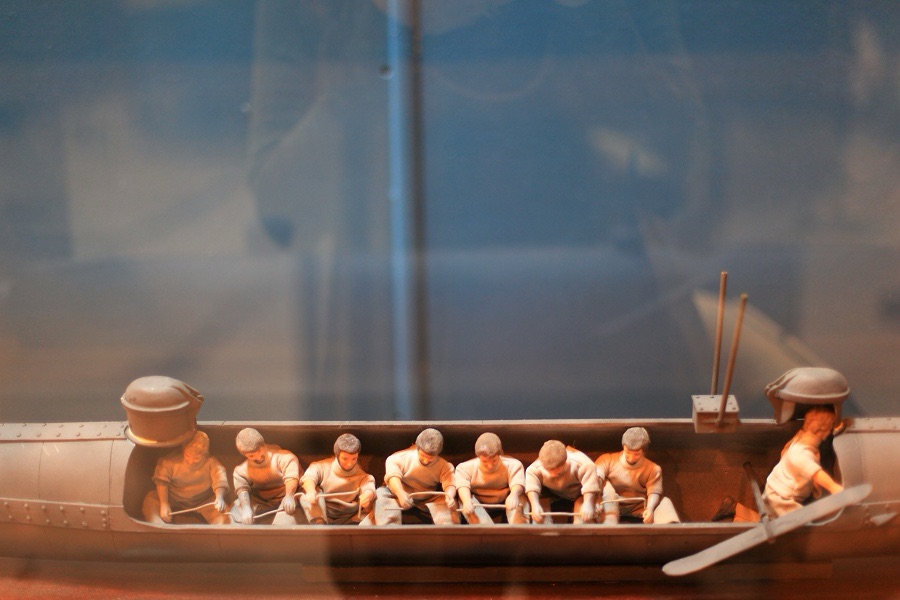
    Scale model of the H.L. Hunley submarine showing eight Confederate sailors hand-cranking the propeller shaft inside the cramped interior.

    In 1864, the Hunley pulled off what no one thought was possible. It crept up on the Union warship USS Housatonic off the coast of Charleston, planted a torpedo on a long spar mounted to its nose, and blew the ship out of the water.

    Mission accomplished. First sub-to-ship kill in world history.

    Would not be a Wacky Wednesday if it ended there.

    The Hunley never came back. It sank too.

    And here’s the wild part: this wasn’t the first time it happened. It was the third time the sub had killed everyone on board.

    Once during testing.

    Once during a training run with its inventor, Horace Hunley, on board.

    And now, even after a successful combat mission.

    Then the thing disappeared for over 130 years. No wreck, no clues just gone.

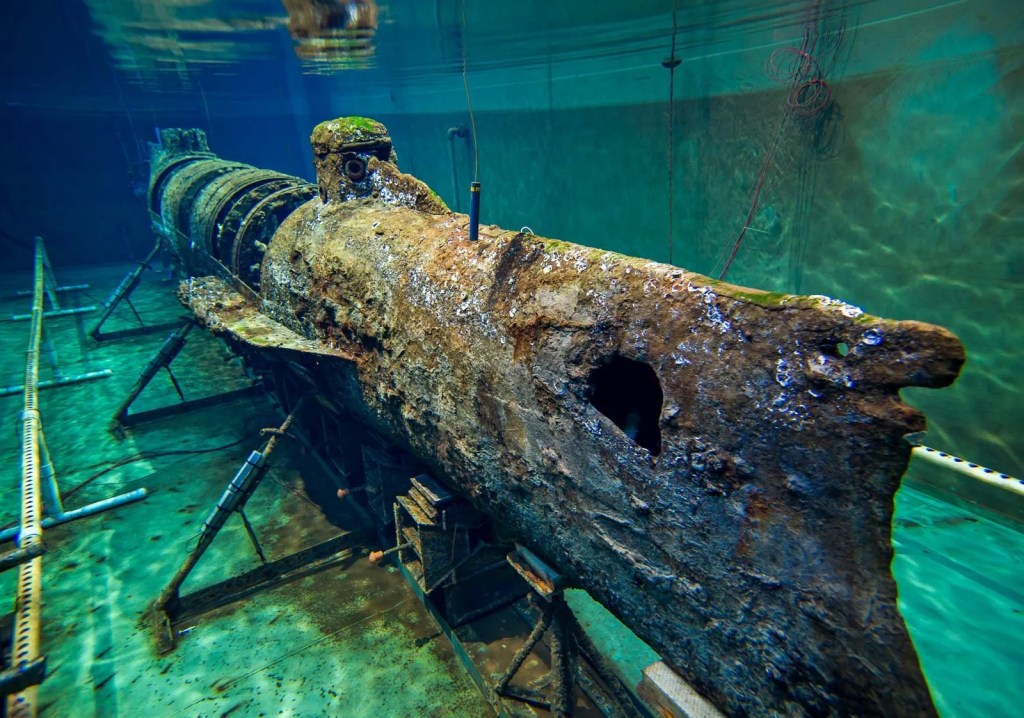
    When they finally found it in the 1990s and brought it to the surface, what they found inside was pretty terrifying. No holes in the hull. No signs of flooding or damage. Just dead.

    To this day, no one really knows how or why but it is thought that the spar torpedo used to sink the Housatonic was the culprit.

    Whatever happened, it was fast and silent.

    So yeah, the Hunley made history. But it also sank three times, killed 21 men, and vanished into legend for over a century.

    Most cursed sub in history? Probably.
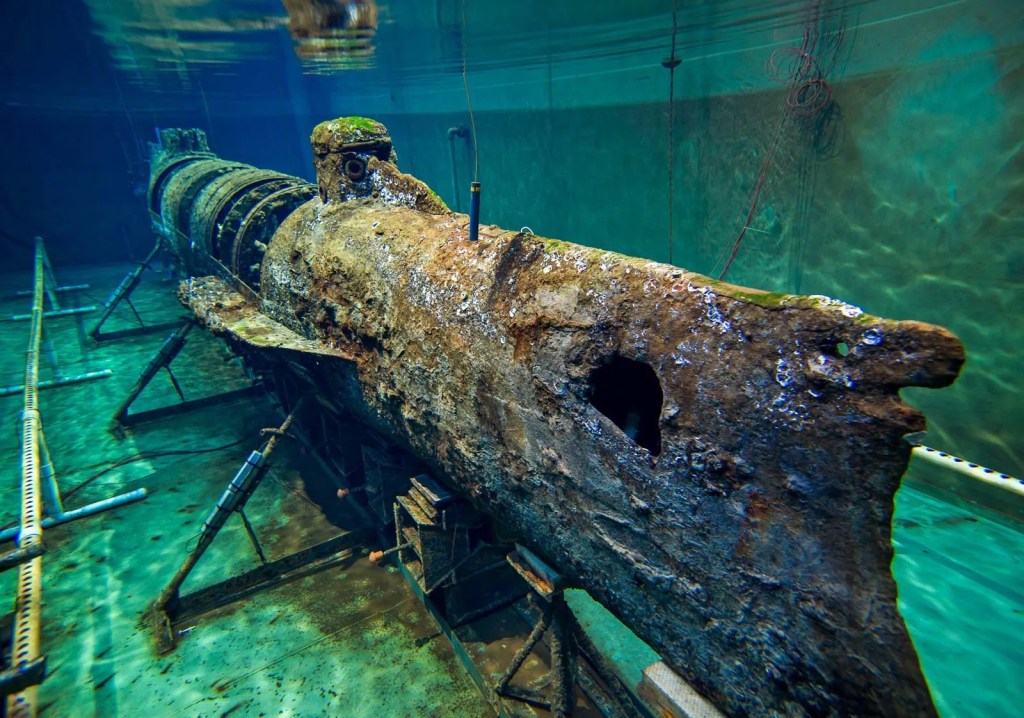
    The preserved remains of the H.L. Hunley submarine resting in a conservation tank, showing its rusted iron hull and narrow structure.

    Image 1 (Actual Submarine): Courtesy of the Friends of the Hunley, www.hunley.org

    Image 2 (Crew Model): Photo by Gerry Dincher, via Wikimedia Commons, Creative Commons license https://commons.wikimedia.org/wiki/File:Hunley_model_cutaway.jpg

    Content sources

    Friends of the Hunley – www.hunley.org National Park Service – nps.gov

    Smithsonian Magazine – The Hunley Submarine Mystery

    Naval History & Heritage Command – history.navy.mil

    Crew model photo by Gerry Dincher via Wikimedia Commons – CC BY-SA 2.0

  • The Ride That Changed Everything: Sheridan and the Horse named Rienzi

    The Ride That Changed Everything: Sheridan and the Horse named Rienzi

    Introducing Friends of the Blue and Gray.

    I’ve gotten a lot of requests to talk about the animals of the Civil War, so I figured it’s time to start a series. I’ll try to do this once a week either Saturday or Sunday. Welcome to Friends of the Blue and Gray. Let’s jump right in!

    October 19, 1864 – Rienzi comes thundering onto the field at Cedar Creek, carrying a general who refused to lose. The tide turned the moment they showed up.

    In a chaotic war, sometimes a man on a horse makes the difference, not a strategy or battle plan.

    That horse was Rienzi, a sleek black gelding gifted to, at the time, Colonel Philip Sheridan in 1862 by officers of the Second Michigan Cavalry. Rienzi had three white fetlocks, and a presence that turned heads. Sheridan named him after the Mississippi town where he received him, and the two would become one of the most iconic rider-horse duos of the war. Actually this name will change, but we will get to that!

    Rienzi carried Sheridan through nearly 50 engagements, including 19 major battles and two cavalry raids. He wasn’t just a mode of transportation, but he was a warhorse through and through: steady under fire, powerful under strain, fast when it mattered, and loyal no matter what.

    Sheridan on Rienzi, racing from Winchester to Cedar Creek. Twelve miles of urgency, one horse, and a general hell-bent on turning a rout into a rally.

    On October 19, 1864, Rienzi earned his legendary status. Sheridan had been away in Winchester, Virginia, when Confederate troops launched a surprise attack on his army encamped at Cedar Creek. The Union lines were breaking. Morale was slipping. Panic was spreading. Sheridan got word and mounted Rienzi.

    What followed was a ride that would live on in poems, paintings, and battlefield legend…. and internet blogs (shameless shoutout).

    Sheridan and Rienzi covered 12 miles in under two hours, galloping past retreating Union troops, shouting them back into formation, rallying them to stand and fight. The sheer sight of Sheridan charging onto the battlefield on Rienzi likely lit a fire in the ranks. The men turned, re-formed, and counterattacked.

    The Union not only held the line but they won the battle.

    A New Name

    After Cedar Creek, Rienzi was renamed Winchester, in honor of the town from which he launched that legendary ride. Sheridan never rode another horse into battle. Rienzi had earned that place for good and rightfully so, Rienzi was a faithful companion (one would say a Friend of Gray).

    Winchester stayed with Sheridan until the horse’s death in 1878. The general had his body preserved and mounted, and today you can still see Winchester on display at the Smithsonian, standing in quiet tribute to one of the most pivotal rides in American military history.

    The horse that carried Sheridan through nearly 50 engagements and one of the most legendary rides in U.S. military history.

    This wasn’t just a warhorse. He was a friend, a companion and a sign of hope. He was part of the moment that changed everything that day in 1864.

    Thanks for taking the time to read this. I actually really enjoy this new theme. Feel free to shoot me a message or an email if you want me to cover something specific.

    Make sure you check out these sources. Great reading!

    Sources:

    Smithsonian Institution – Winchester (Rienzi) Smithsonian Magazine – “Philip Sheridan’s Valiant Horse” Emerging Civil War – “A Horse Named Rienzi” American Battlefield Trust – “Sheridan’s Ride”

    Image credits :

    Image 1 (Color painting of Sheridan rallying troops): American Battlefield Trust – https://www.battlefields.org/learn/articles/sheridans-ride

    Image 2 (Black & white illustration of Sheridan’s ride): Library of Congress – https://www.loc.gov/item/2005681732/

    Image 3 (Preserved horse at the Smithsonian): Smithsonian Institution – https://americanhistory.si.edu/collections/search/object/nmah_439678

  • The Battle of Glorieta Pass

    The Battle of Glorieta Pass

    The “Gettysburg of the West”

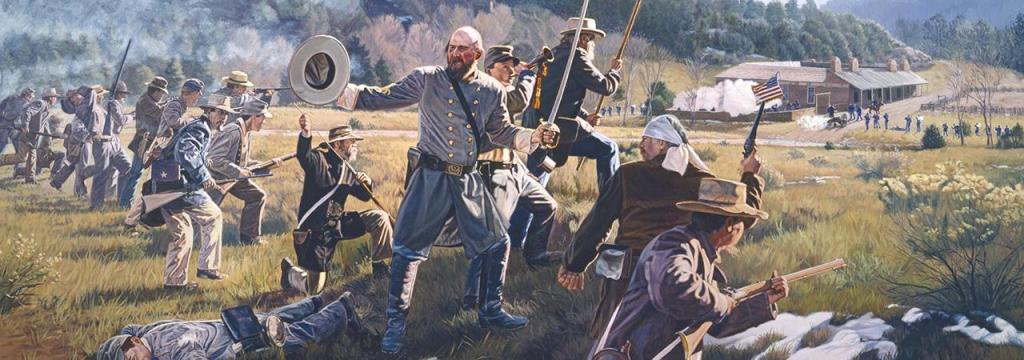
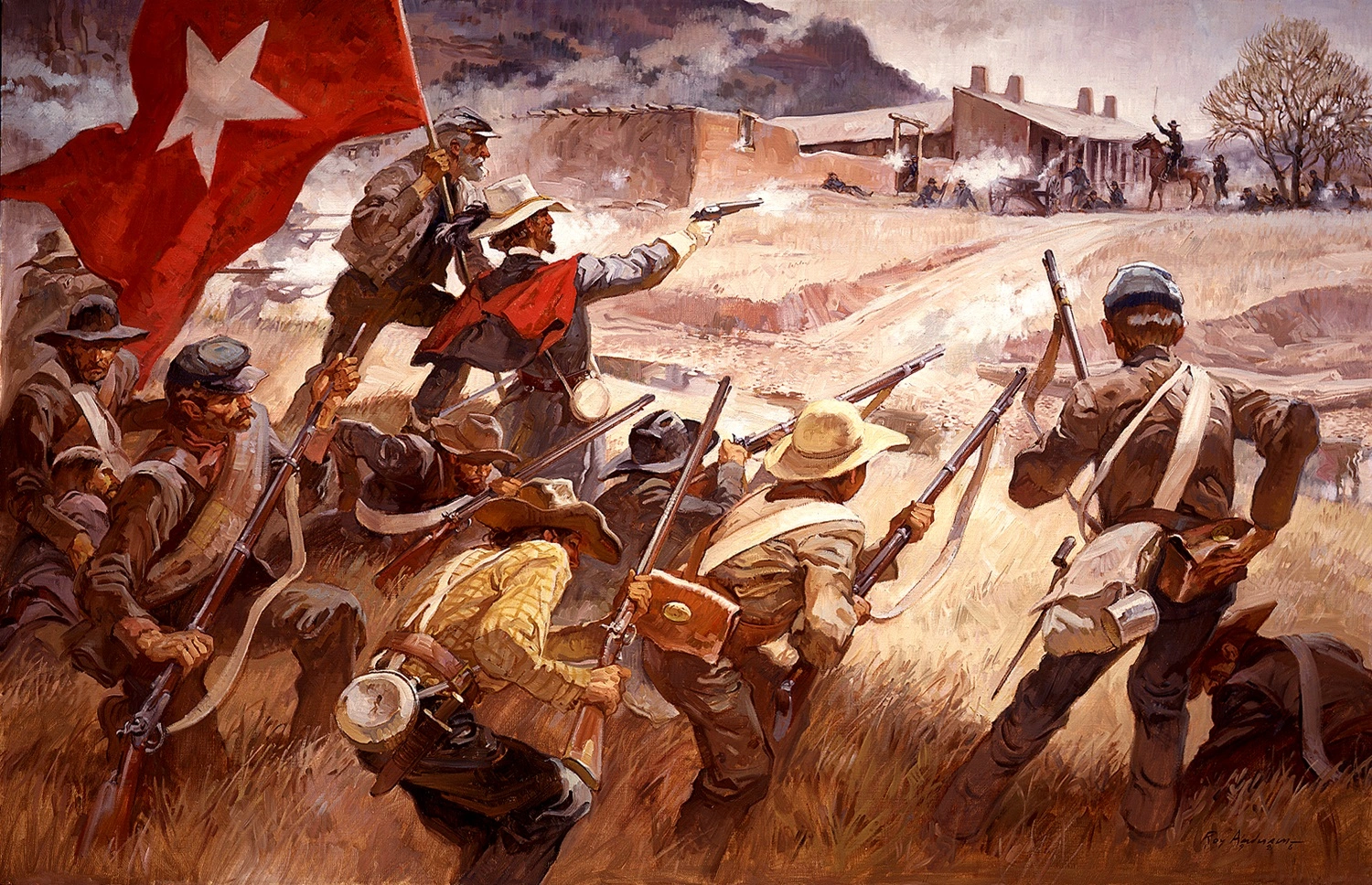
    Illustration of Union and Confederate soldiers clashing at Pigeon’s Ranch during the Battle of Glorieta Pass, painted by Roy Andersen. ByIllustration of Union and Confederate soldiers clashing at Pigeon’s Ranch during the Battle of Glorieta Pass, painted by Roy Andersen.
    When people think of the Civil War, they picture Virginia, Pennsylvania, maybe Tennessee, but not New Mexico. In the mountains of the Southwest, a battle played out that could’ve changed the course of the war in the West. It’s called the Battle of Glorieta Pass, and while it doesn’t get the attention of places like Gettysburg or Antietam, it was still a turning point in the fractured nation.

    This was in March 1862. The Confederacy had the idea to sweep westward and take the gold fields in Colorado, eventually snagging California’s ports, and maybe even gain international recognition. They sent troops under General Sibley north from Texas, and they’d already taken Albuquerque and Santa Fe. Things were looking pretty good for them up to this point.

    Then comes Glorieta Pass.

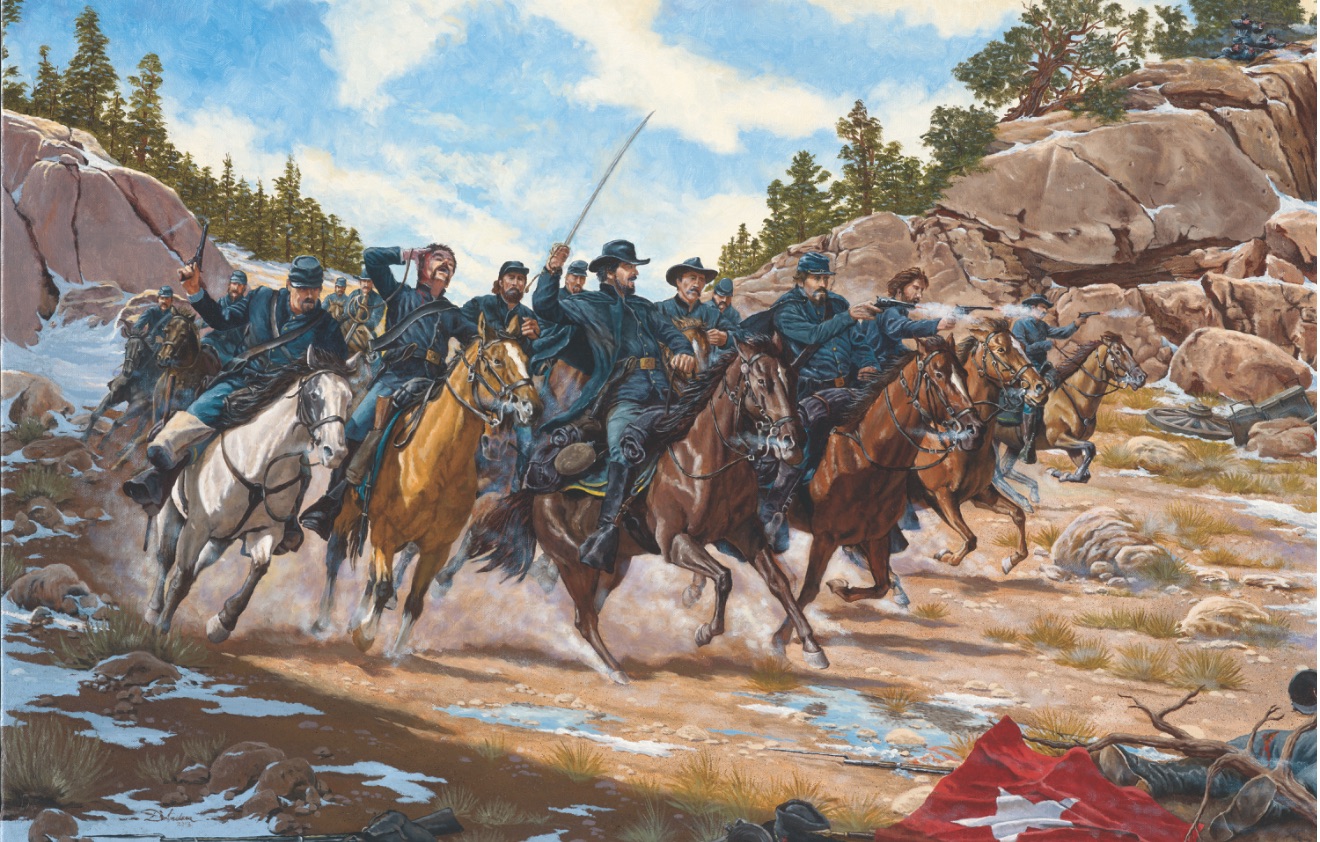
    Painting of the Union cavalry charge at Apache Canyon during the Battle of Glorieta Pass, March 1862, by Domenick D’Andrea.Painting of the Union cavalry charge at Apache Canyon during the Battle of Glorieta Pass, March 1862, by Domenick D’Andrea.
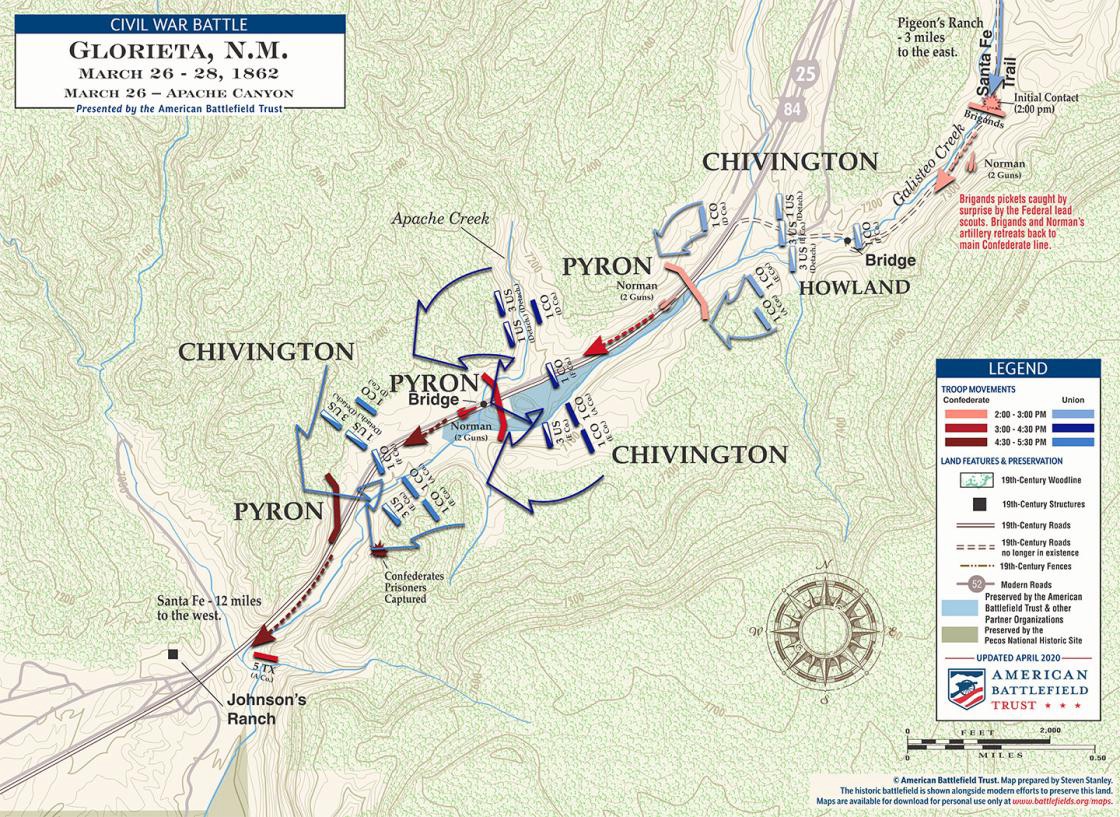
    This narrow, rugged pass in the Sangre de Cristo Mountains was basically the gateway to the rest of the West. Union troops, including a mix of regular soldiers and Colorado volunteers, moved in to stop the Confederate advance. What happened next was a three-day fight, March 26 to 28, that was brutal, confusing, and fought in freezing weather and rocky terrain.

    Battle map showing Union and Confederate troop movements at Apache Canyon on March 26, 1862, during the Battle of Glorieta Pass.Battle map showing Union and Confederate troop movements at Apache Canyon on March 26, 1862, during the Battle of Glorieta Pass.

    The actual fighting was fierce. At one point, hand-to-hand combat broke out in a narrow canyon. Both sides claimed small victories, but it was what happened off the battlefield that really decided things. A group of Union soldiers, led by Major John Chivington, snuck around and found the Confederate supply train. They destroyed it — wagons, food, ammo, everything. Just torched it all.

    With no supplies and hundreds of miles from home, the Confederates had no choice but to retreat. Their whole campaign collapsed.

    Civil War battle map showing troop positions at Pigeon’s Ranch on March 28, 1862, during the final day of the Battle of Glorieta Pass.Civil War battle map showing troop positions at Pigeon’s Ranch on March 28, 1862, during the final day of the Battle of Glorieta Pass.

    That’s why some folks call Glorieta Pass the “Gettysburg of the West.” It stopped the Confederate push. If they’d succeeded, who knows how the map of America might look today?

    It’s a strange little battle; not huge in numbers, but huge in impact. And it’s a good reminder that the Civil War wasn’t just fought in the green fields of Virginia or along the Mississippi River. It reached the deserts, the mountains, and even the far corners of the frontier.

    Sources & Further Reading

    Image Credits

  • First Flag Friday

    First Flag Friday

    While not actually Friday, this post is part of a weekly series honoring Civil War flags and the stories sewn into their fabric. I’m reviving this series after Instagram removed my previous post — this time, it’s staying.

    A Regiment Forged in Fire

    The 26th North Carolina Infantry Regiment was formed in August 1861, largely composed of young men from western North Carolina. By 1863, it had grown into the largest regiment in the Army of Northern Virginia, with nearly 900 men under arms. Their commander, Colonel Henry King Burgwyn Jr., was just 21 years old, a boy in age and was known as the “Boy Colonel.” As someone who turned 21 in the Army I could not imagine leading 900 men when I could hardly lead myself…

    The regiment’s legacy would be defined by a single brutal day: July 1, 1863, on the outskirts of Gettysburg, Pennsylvania, you have probably heard of it and if you have not you must be looking up color combos for your wedding (Blue and Gray get it…).

    Gettysburg: The Slaughter at McPherson’s Ridge

    As the Battle of Gettysburg opened, the 26th North Carolina advanced as part of General Heth’s division, crashing into Union troops of the famed Iron Brigade, specifically the 24th Michigan Infantry, one of the toughest and best equipped regiments in the Union Army.

    The two sides fought at point-blank range through the woods and open fields of McPherson’s Ridge, exchanging fire in a near-suicidal contest of will. Muskets overheated. Trees splintered. Men collapsed in rows.

    Colonel Burgwyn, leading from the front, personally took the regimental colors after multiple color bearers had fallen. He was struck in the side and died shortly after, uttering only, “Tell my mother I die with my face to the enemy.” Honestly, some of the most incredible last words you could imagine.

    Casualties That Shocked Both Sides

    By the time the smoke cleared, the 26th had lost 588 men out of roughly 850 engaged—more than 70% casualties in a single day, the highest regimental losses suffered by either side at Gettysburg. Over 13 color bearers were shot down while carrying the flag.

    The 24th Michigan, though victorious on the field, suffered nearly 400 casualties themselves. The fight between the two regiments was so intense that it’s still cited in military studies of small unit combat.

    Two days later, the remnants of the 26th participated in Pickett’s Charge, advancing again under fire. Only around 80 men answered roll call after the battle ended.

    The Flag That Would Not Fall

    The regiment’s battle flag, a Confederate standard, was pierced by dozens of bullets, soaked in blood and gunpowder, and nearly captured several times. After the war, it was returned to North Carolina and has since become one of the most iconic Confederate flags in existence. Not because of what it symbolized politically, but because of the story it tells about sacrifice, command, and loss. (Can’t be banned here Instagram HA!)

    Legacy and Memory

    The 26th North Carolina is memorialized today with monuments at Gettysburg and in North Carolina. Their story is often cited not to glorify war, but to illustrate the devastating human cost of loyalty, leadership, and civil conflict.

    The flag of the 26th North Carolina still exists. It has been preserved and displayed, most notably in Raleigh during special exhibitions. The blood on it is real. The holes are real. The deaths were real.

    Sources & Further Reading