Category: Confederacy

  • William L. Kemp: A Confederate Soldier Remembered in New York

    William L. Kemp: A Confederate Soldier Remembered in New York

    A Mystery in New York

    At first glance, a Confederate soldier buried in New York might seem like a mistake or at least a mystery. But that’s exactly what makes the story of William L. Kemp so compelling. Born in Virginia, a veteran of the Civil War, and eventually laid to rest far from the fields he once fought for, Kemp’s life tells a quiet but fascinating story of service, survival, and unexpected turns.


    Early Life in York County

    William L. Kemp was born on February 6, 1824, in York County, Virginia. This coastal region of southeastern Virginia was home to farmers, tradesmen, and working-class families. While little is documented about Kemp’s youth, we know he married Eliza Frances Dyer in 1846 in Richmond, Virginia. This is a sad tale that happened to many people in this time period. They would have several children and spend the next decade building a life. That life would soon be disrupted by war.


    Service in the Civil War

    When the Civil War broke out, Kemp joined the Confederate ranks, enlisting as a Private in Company C, 10th Battalion Virginia Heavy Artillery, also known as Allen’s Battalion.

    This wasn’t just any unit. The 10th VA Heavy Artillery was assigned to defend key points around Richmond and coastal Virginia. These were the men behind the big guns, responsible for manning fixed fortifications, guarding the capital of the Confederacy, and eventually converting to infantry roles as manpower dwindled.

    In 1864, the unit helped repel Union forces at Drewry’s Bluff, one of the critical defenses south of Richmond. As the war neared its bitter end, the 10th was absorbed into the infantry and joined Lee’s Army of Northern Virginia. Kemp’s unit fought in the final campaigns leading up to the Confederate surrender at Appomattox in April 1865.

    Kemp survived the war. There’s no record of him being wounded or promoted, but his continued presence in unit rosters tells us one thing, he endured and he survived through some of the worst.


    A New Life Up North

    After the war, Kemp didn’t stay in Virginia forever. He and Eliza eventually relocated to Patchogue, New York, on Long Island. We don’t know exactly when the move happened, but census and family records suggest it was sometime in the 1870’s.

    Why New York? It could have been for work, family, or simply the fresh start many former Confederates sought after the South’s defeat. Whatever the reason, he lived out his final years there and passed away on May 14, 1880, at the age of 56.


    Remembered by His Family

    Kemp’s wife, Eliza Frances Kemp, survived him by more than three decades. She lived in Patchogue until her death in 1912. Interestingly, she applied for and received a Confederate widow’s pension from the state of Virginia in 1906, long after they had left the South. This confirms just how real and enduring their ties to the war remained.


    A Grave Far from Home

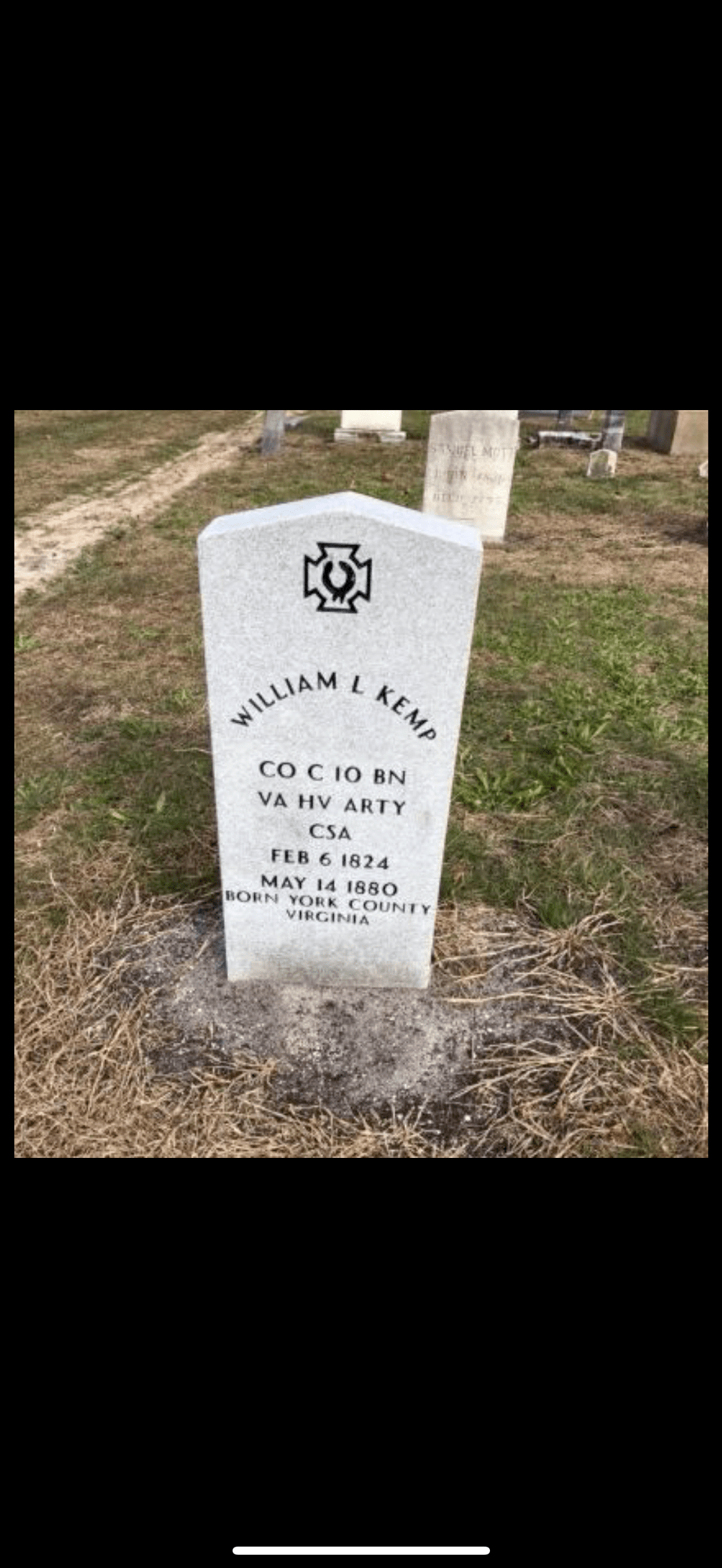
    Today, William L. Kemp is buried in Lakeview Cemetery in Patchogue, NY, beneath a Confederate veteran’s marker. The gravestone, which includes the Southern Cross of Honor, recognizes his service with Company C of the 10th Virginia Heavy Artillery. It’s a quiet but striking reminder that the war’s legacy reached far beyond the Mason-Dixon line.


    Legacy

    William L. Kemp like tens of thousands of others, he was there. He served. He survived. He rebuilt. And thanks to the records, markers, and memories preserved by his family, his story still matters.

    Sometimes history isn’t about the biggest names. It’s about the real people who carried the weight of their time, people like William L. Kemp.


    Got ancestors with similar stories? Drop them in the comments or shoot me a message this page is all about telling the forgotten stories of the Civil War.
  • Friends of the Blue and Gray: Little Sorrel

    Friends of the Blue and Gray: Little Sorrel

    Alright, it’s the weekend, which means it’s time for a new post on Friends of the Blue and Gray. I honestly love this series, and it seems to be pretty popular, so I am happy you guys are enjoying it too!

    I think today I am finally going to talk about Little Sorrel. I have been putting it off for a bit just because he is already so well known. But let’s give this Friend a proper post today.

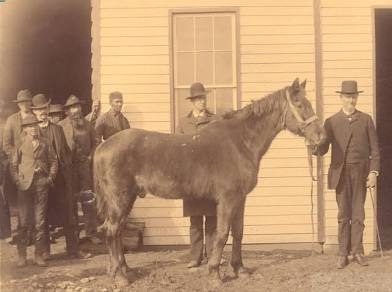
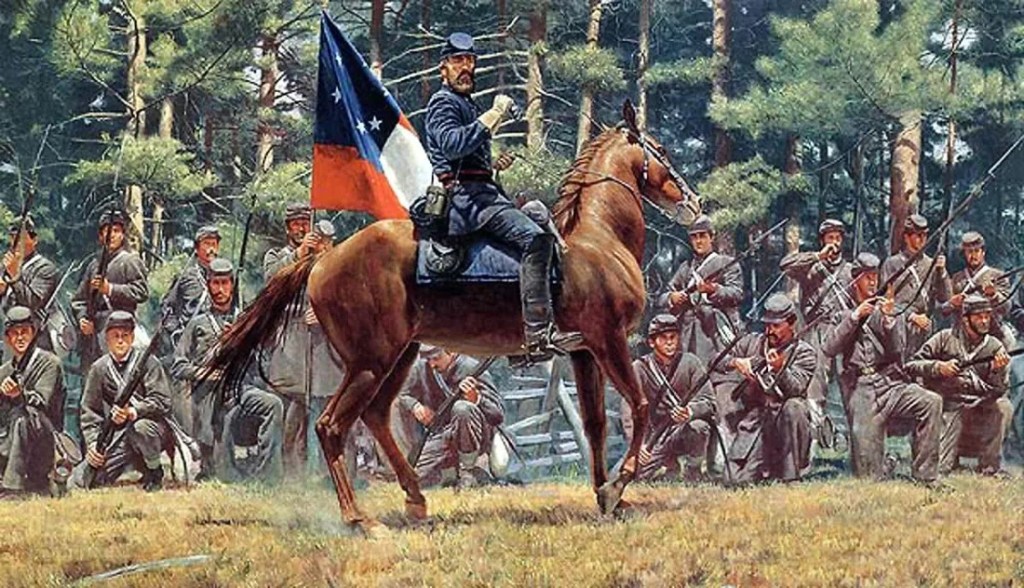
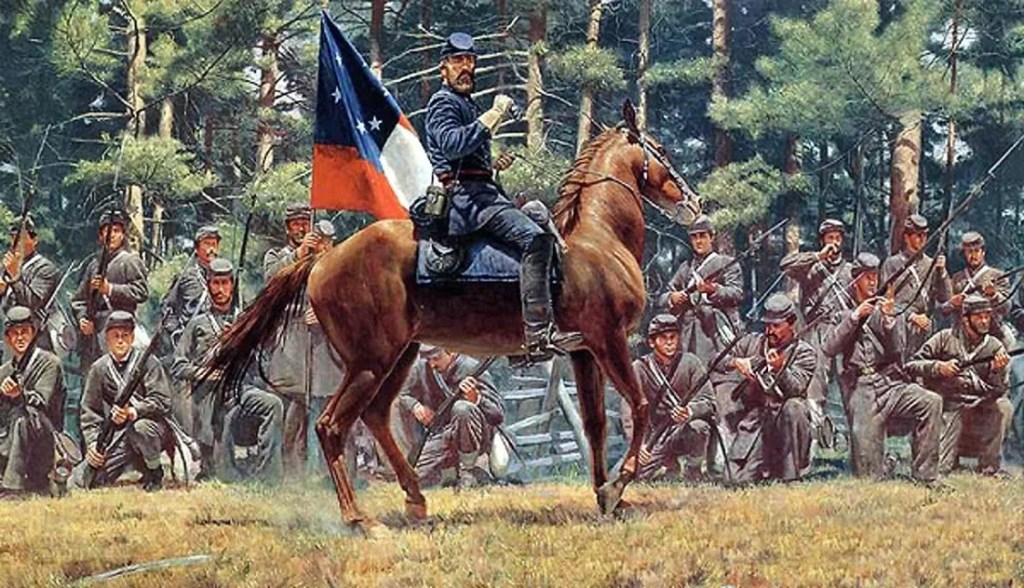
    In 1861, Little Sorrel was en route to Washington, D.C., as a Union cavalry horse when the train he was on was captured by Confederate forces at Harpers Ferry. Officers were allowed to pick from the seized horses—most chose the biggest and strongest mounts, and Jackson did too. He initially selected a larger horse, later known as Big Sorrel, while Little Sorrel was meant as a gift for his wife. At the time, the smaller horse was called Fancy.

    But as it turned out, Big Sorrel couldn’t keep up with Jackson’s relentless pace and did not respond well to rifle and artillery fire. So the general made a decision. He ended up riding Little Sorrel into history.

    Little Sorrel was a small, wiry Morgan horse. I don’t know much about horses, so if someone wants to explain what a Morgan is, feel free. What I do know is that Little Sorrel was known for being fiercely loyal and incredibly dependable.

    If you follow this page, you already know what kind of man Thomas Jackson was. His men were called the “Foot Cavalry,” which should tell you everything about the pace and pressure they endured. That nickname paints a clear picture of what was expected from both man and animal and why a tough, determined horse was the perfect match for a relentless general.

    Jackson also was deeply loyal to his mount, with reports stating that he would never ride another horse and quotes saying, “Where Little Sorrel went, Jackson went.”

    Little Sorrel and Jackson went through nearly every major battle together: First Manassas, the Valley Campaign, the Seven Days Battles, Second Manassas, Antietam, Fredericksburg, and finally Chancellorsville—which, as we know, would be Jackson’s last ride.

    After Jackson’s death, Little Sorrel lived on and became a sort of mascot for the South. There are even stories of him walking up to cadets at VMI looking for treats… maybe he was looking for lemons in memory of an old friend.

    Damn, that sentence hurt writing.

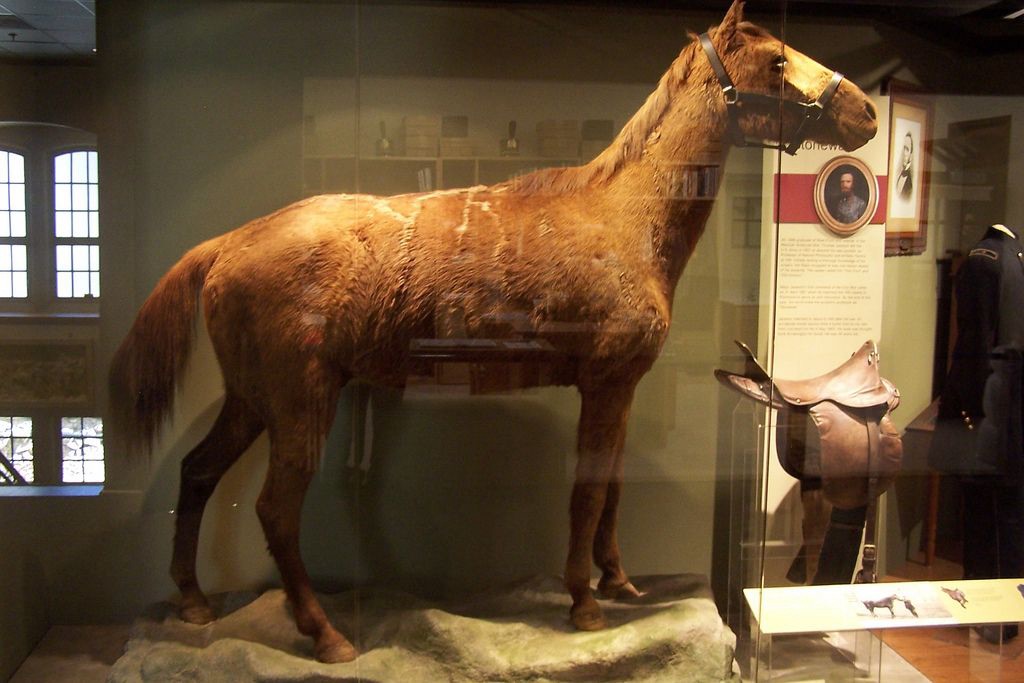
    He died in 1886 at around 36 years old. Little Sorrel is actually still at VMI. I will attach the picture to this post.

  • Flag Friday: Cleburne’s Division – The Hardee Flag

    Flag Friday: Cleburne’s Division – The Hardee Flag

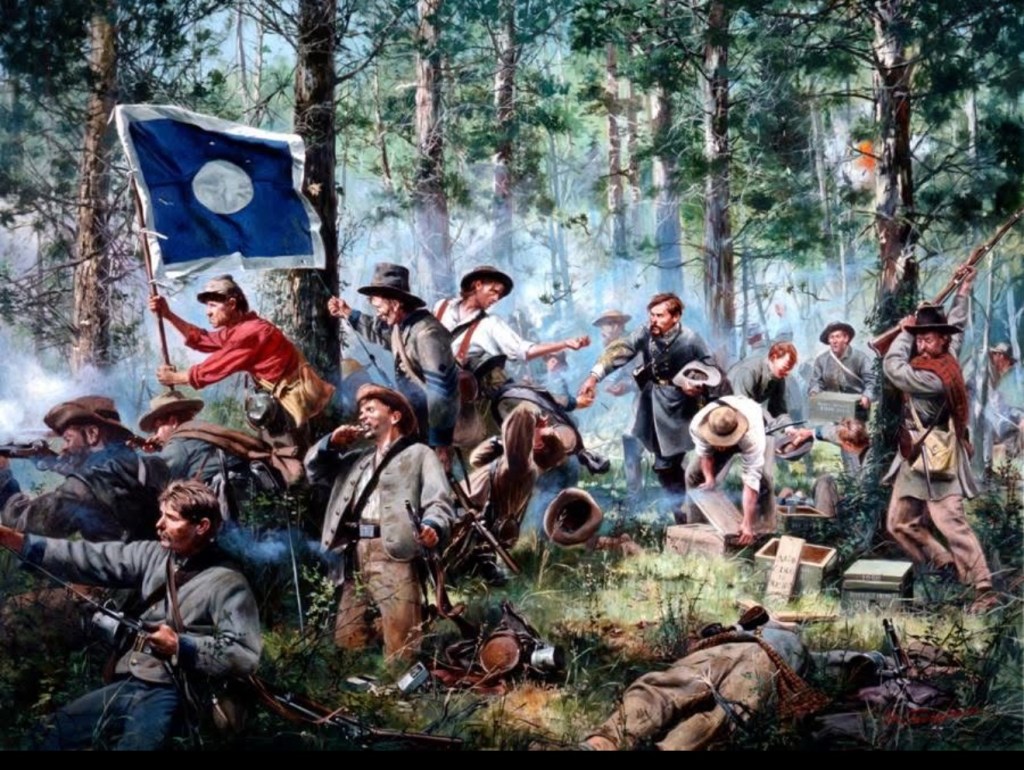
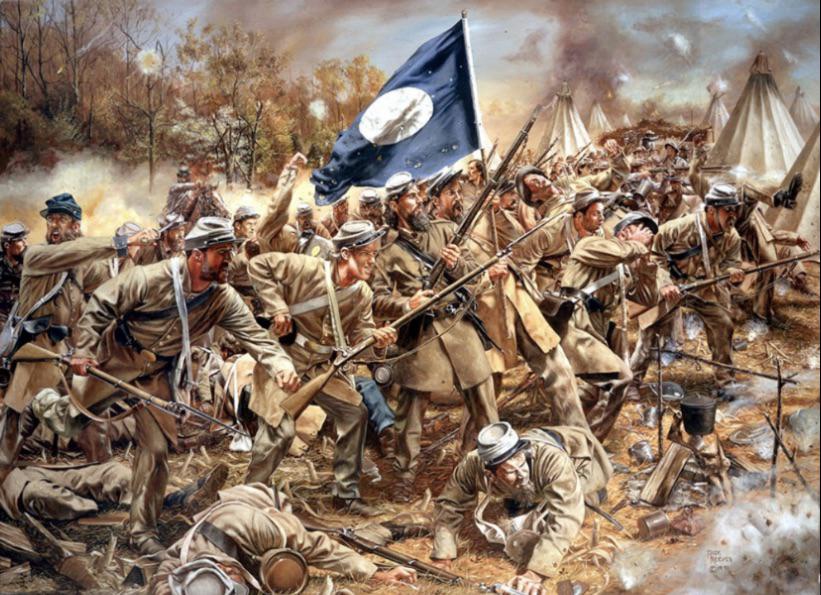
    No stars. No stripes. No flashy colors. Just a deep blue field with a plain white circle in the center. That’s it.

    But when this flag showed up on a battlefield, Union troops knew they were in for a fight. It wasn’t just another banner waving in the smoke it was a warning. This meant Cleburne’s Division was coming. And that meant trouble.

    This was the battle flag carried by some of the most disciplined and aggressive Confederate soldiers in the Western Theater. It wasn’t about style. It was about identity. And this flag became the visual identity of a division that earned its reputation in blood and fire. From the thick woods of Chickamauga to the high slopes of Missionary Ridge, and from the brutal trench fights at Pickett’s Mill to the outright slaughter at Franklin, this flag was there. It saw it all.

    These weren’t just soldiers, but they were fighters. Many were Irish immigrants fresh off the boat, others were poor Southern farmers, and some were hardened Texans and Arkansans who’d been in the ranks since Shiloh. What they had in common was a fierce loyalty to their general, their comrades, and the cause.

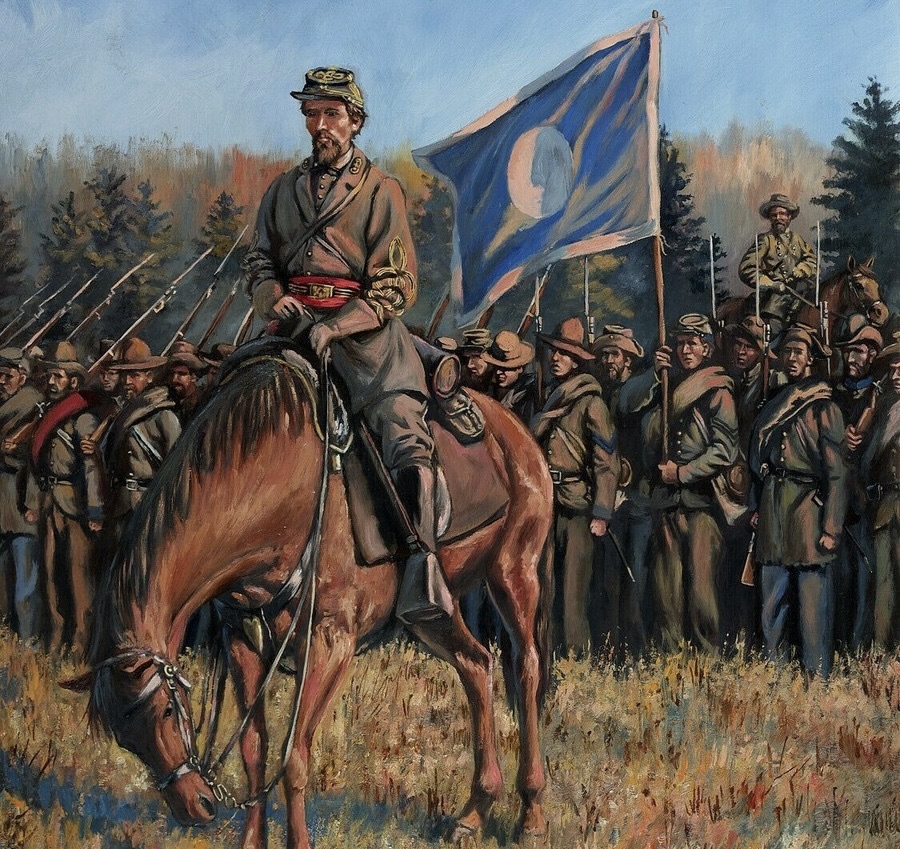
    At the center of it all was Major General Patrick Cleburne. Irish-born, a former British soldier, and easily one of the most respected Confederate commanders of the war. His troops adored him. His fellow officers respected him. Even Union generals knew his name and feared his presence on the battlefield. They called him the “Stonewall of the West,” and it fit. He was sharp, calm under pressure, and deadly when the time came to strike.

    At Franklin, Cleburne met his end. He was killed in one of the most hopeless frontal assaults of the war, sword drawn, charging straight into the guns on foot. He wasn’t behind the line. He wasn’t giving orders from a hill. He was up front, as always and the Hardee flag was right there with him.

    There’s a quote that stuck with me and inspired me to write this. 

    “General Patrick Cleburne was killed. He had his sword drawn and was riding in front of his men, leading the charge, when he was shot and instantly killed. I saw him after the battle — his face looked calm and as though he were asleep. A more gallant soldier never wore the gray, nor drew blade in any cause, right or wrong. Cleburne was the idol of the Army of Tennessee.” – Sam Watkins, 1st Tennessee Infantry, on the death of Maj. Gen. Patrick Cleburne at Franklin

    That’s why this flag hits differently.

    It’s not just about design. It’s what it stood for.  The grit, the resolve, and the quiet kind of courage. The Hardee flag is a perfect fit for the division it represented: plain, no-nonsense, and deadly serious. No frills. No politics. Just fight.

    Image Credits:

    1. “Hell in the Western Woods” – Painting by Don Troiani

    2. “General Patrick Cleburne” – Art by Mark Maritato

    3. “Into the Fight” – Also by Don Troiani

  • Wacky Wednesday. Old Douglas

    Wacky Wednesday. Old Douglas

    Old Douglas: The Camel Who Marched to War

    When people think of the American Civil War, they imagine soldiers in blue and gray, 12 pounder cannons, and battles from Gettysburg to Shiloh. But few would picture a camel trekking through camp alongside Confederate infantrymen. Yet that’s exactly what happened.

    Old Douglas was a dromedary camel, and his journey into American military history began long before the Civil War. In the 1850s, the U.S. Army launched what became known as the Camel Corps experiment. The idea, backed by then Secretary of War, Jefferson Davis, (yes that one you may have heard of) was to import camels from the Middle East and North Africa to serve as pack animals in the dry and rugged terrain of the American Southwest. Camels proved more durable than horses or mules, but the project never gained long-term support. By the time the Civil War broke out, the camels were scattered or sold off.

    One of those camels, Douglas, ended up in the ranks of the 43rd Mississippi Infantry. Though he startled horses and drew curious stares, he was used to carry gear and supplies and quickly became a familiar presence in the regiment. To many of the men, he was more than just a beast of burden. He was part of the unit.

    Douglas marched with the soldiers, stood by during long encampments, and endured the same conditions they did. When the regiment came under fire at the Siege of Vicksburg, Douglas was shot and killed by a Union sharpshooter. Reports say the men were furious. Some stories claim they hunted down the shooter. Others say they gave Douglas a soldier’s burial not as a mascot, but as a comrade.

    That story might sound strange or even absurd but for me, it resonates deeply.

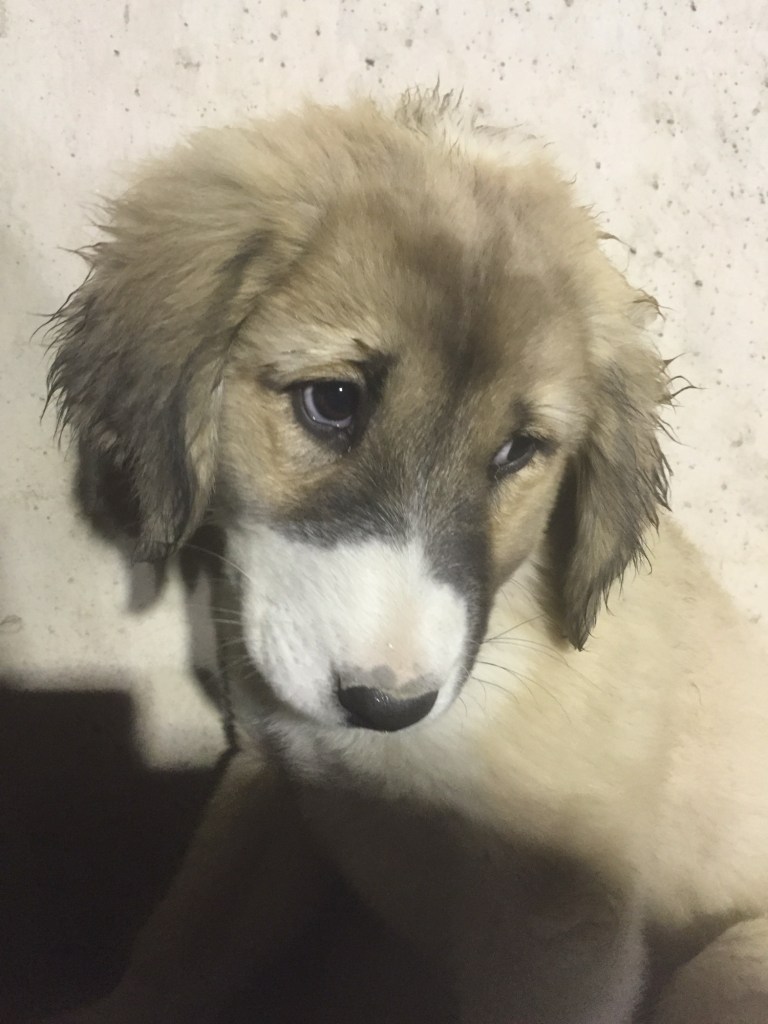
    I served as an infantryman in Afghanistan. We didn’t have camels in our ranks (although I saw plenty of them), but we did have stray dogs that wandered into our outposts and decided to stay. They weren’t official, they didn’t follow orders, but they were ours. In a place where everything was harsh and uncertain, those dogs gave us comfort. They made us laugh. They reminded us we were human.

    I understand why the men of the 43rd Mississippi loved Old Douglas. War strips everything down to survival, but even in that environment, small sources of connection and companionship become something sacred. Whether it’s a dog in a forward operating base in the mountains of Afghanistan or a camel in a Civil War camp in Mississippi, those moments of familiarity mean more than people realize.

    Old Douglas may seem like a historical oddity and he is a “Wacky Wednesday” kind of fact. But his story is more than that. It’s a reminder of how strange, human, and deeply personal war really is. He may have looked out of place in the American South, but to the men who marched beside him, Douglas belonged as one of their own.

    And honestly he deserves to be remembered that way. Just like I remember the dogs in Afghanistan.

    One of the Dogs in Afghanistan. We named her Lazy. She was anything but Lazy. Followed us everywhere we went.
    One of her puppies. This was Spazz.
    Another of her pups. This was Poof.

    Sources:

    American Battlefield Trust – Old Douglas the Camel: https://www.battlefields.org/learn/articles/old-douglas-camel

    Daniel, Larry J. Cannoneers in Gray: The Field Artillery of the Army of Tennessee, 1861–1865. University of Alabama Press, 2012.

    Harris, David. The United States Camel Corps: An Army Experiment. Texas A&M University Press, 2006.

    U.S. Army Center of Military History – The Camel Corps: https://history.army.mil/news/2011/110400a_camel.html

  • Earl Van Dorn

    Earl Van Dorn

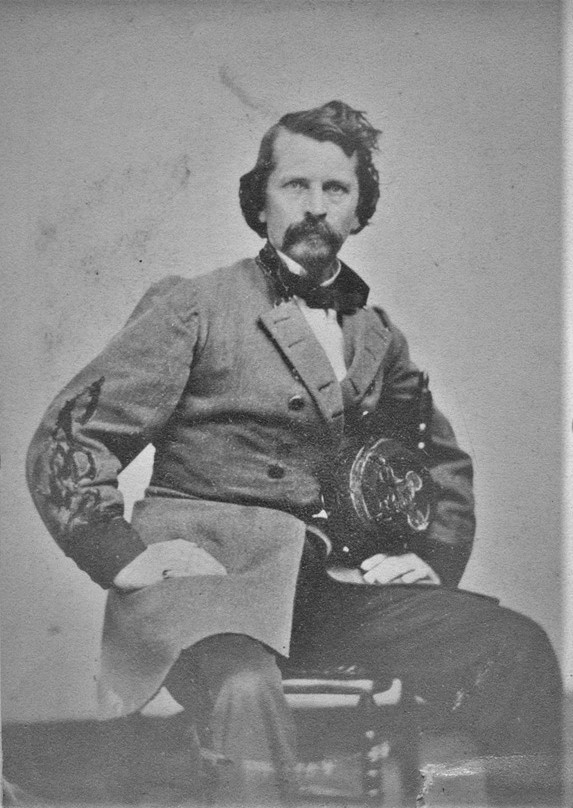
    Earl Van Dorn was one of the most interesting and controversial generals in the Confederate Army during the Civil War. He was brave, charming, and full of energy. But he also made a lot of mistakes, both on the battlefield and in his personal life. His story is part action movie, part soap opera.

    Early Life

    Van Dorn was born in Mississippi in 1820. He came from a wealthy Southern family and went to West Point, the US military academy. He didn’t get the best grades, but he proved himself as a tough and fearless fighter during the Mexican American War and in battles against Native American tribes in Texas.

    People liked him (not everyone on my Instagram poll did though). He was handsome, polite, and popular with women. He dressed well and acted like a Southern gentleman. But some said he cared more about looking good and being liked than thinking things through.

    Losing Battles

    At the start of the Civil War, Earl Van Dorn joined the Confederate army and was quickly made a general. He was given command of a large force in the western part of the country, an area the Confederacy hoped to control to keep key states like Missouri and Arkansas in the fight.

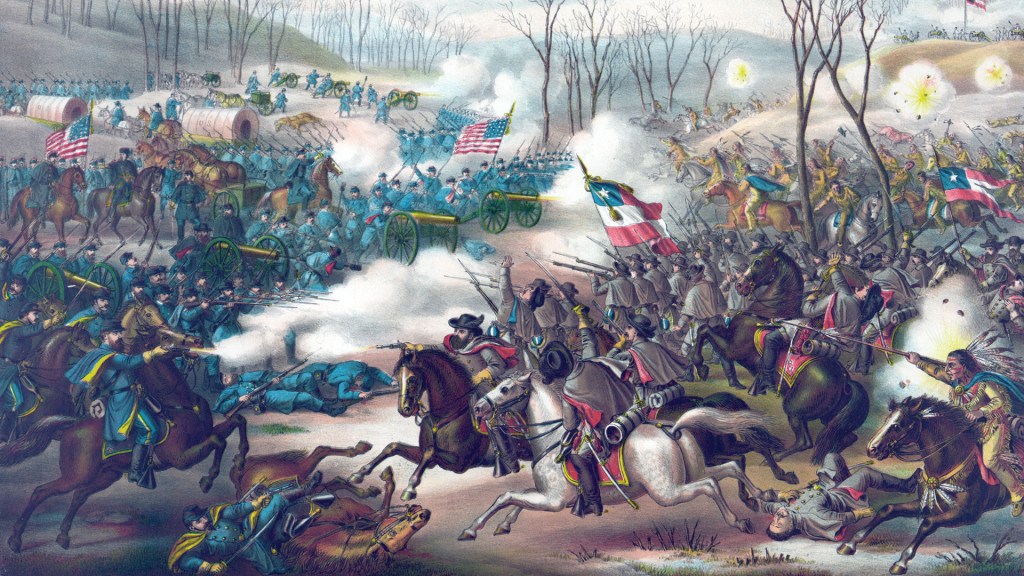
    In March 1862, Van Dorn led Confederate troops at the Battle of Pea Ridge in Arkansas. It was one of the most important battles in the Trans-Mississippi region. Van Dorn tried to surprise the Union army by attacking from behind, but his plan was risky and poorly organized. His troops were tired from marching all night, and their supplies were far behind. During the battle, two key Confederate generals, Ben McCulloch and James McIntosh, were killed early on, causing confusion. The attack fell apart, and the Union army won. It was a major defeat that gave the North firm control of Missouri.

    Later that year, in October 1862, Van Dorn led another major attack but this time at the Battle of Corinth in Mississippi. Hoping to retake the town, he launched a fast and aggressive assault. But again, he failed to prepare properly. The Union forces, led by General Rosecrans, were well-defended. Van Dorn’s men fought hard but were forced to retreat under heavy fire. It was another bloody and costly loss.

    After these back-to-back failures, many Confederate leaders started to doubt whether Van Dorn should be in charge of large armies. His bravery was never questioned, but his planning, leadership, and attention to detail were.

    Cavalry Leader

    Van Dorn was better at leading smaller, fast moving groups of soldiers, especially cavalry which are troops on horseback. In December 1862, he led a surprise attack on the Union supply base at Holly Springs, Mississippi. It was a huge success. His men destroyed tons of supplies and messed up General Grant’s plans to move south. Even Grant later admitted that Van Dorn’s raid caused him serious problems.

    A Scandalous Ending

    But Van Dorn’s biggest problem wasn’t just on the battlefield, it was off of it.

    While staying in Spring Hill, Tennessee, he started an affair with a married woman. Her husband, Dr. George Peters, was furious. One day in May 1863, Peters walked into Van Dorn’s office and shot him in the back of the head. Van Dorn died instantly.

    Dr. Peters was never punished. Some say people looked the other way because Van Dorn had a reputation for being too friendly with other men’s wives.

    What We Remember

    Earl Van Dorn was brave and bold. He knew how to inspire soldiers and take risks. But he also made mistakes that cost lives. And in the end, his personal life caught up with him.

    Some remember him as a hero. Others see him as someone who never quite lived up to his potential.

    Either way, Earl Van Dorn’s story is one of the wildest of the Civil War and it’s one that people still talk about today.