Author: Tyler

  • The Battle of Glorieta Pass

    The Battle of Glorieta Pass

    The “Gettysburg of the West”
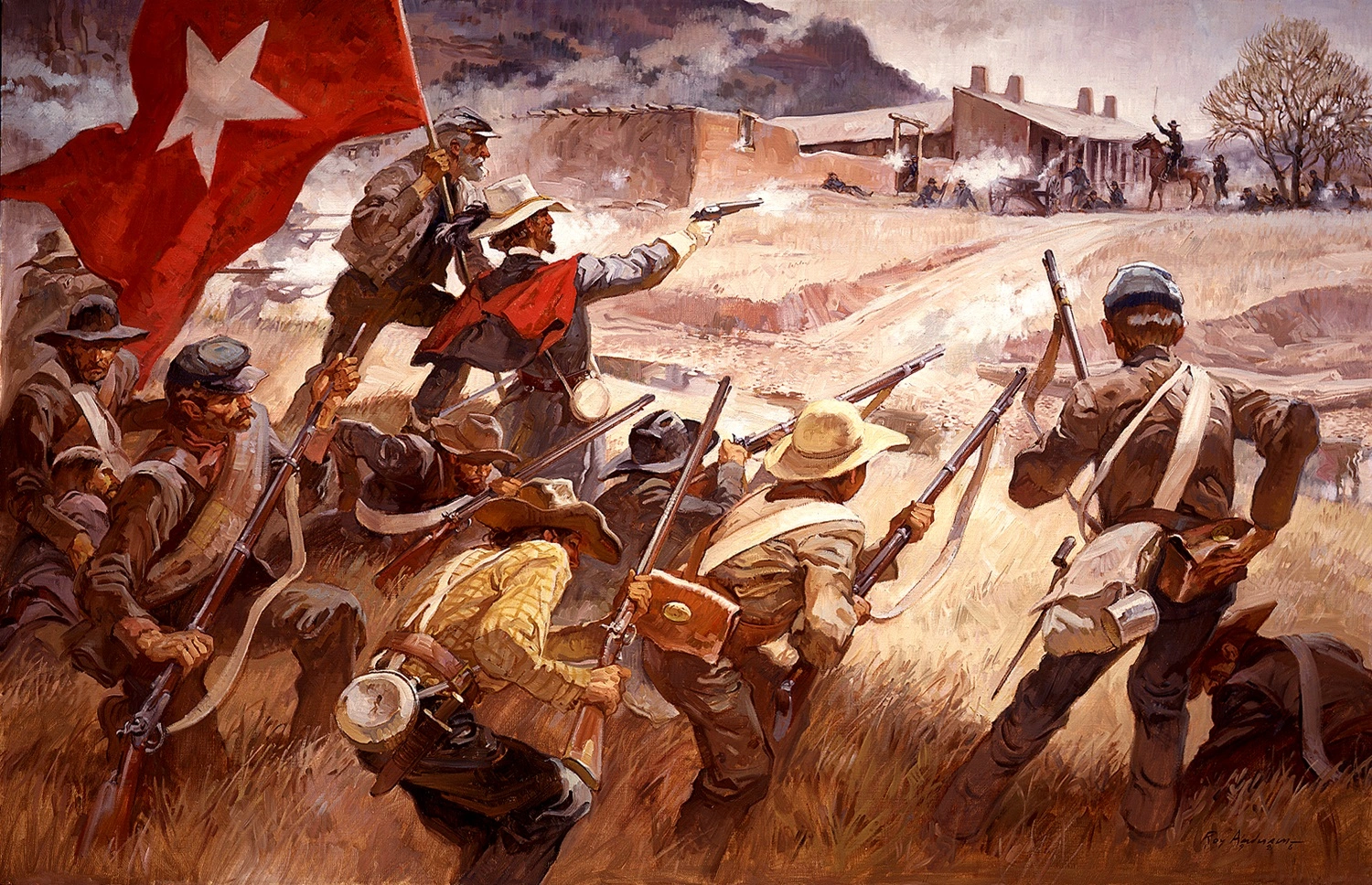
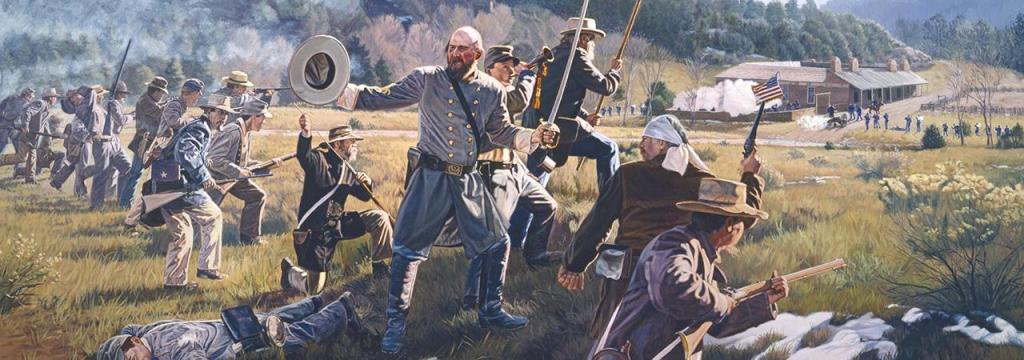
    Illustration of Union and Confederate soldiers clashing at Pigeon’s Ranch during the Battle of Glorieta Pass, painted by Roy Andersen. ByIllustration of Union and Confederate soldiers clashing at Pigeon’s Ranch during the Battle of Glorieta Pass, painted by Roy Andersen.

    When people think of the Civil War, they picture Virginia, Pennsylvania, maybe Tennessee, but not New Mexico. In the mountains of the Southwest, a battle played out that could’ve changed the course of the war in the West. It’s called the Battle of Glorieta Pass, and while it doesn’t get the attention of places like Gettysburg or Antietam, it was still a turning point in the fractured nation.

    This was in March 1862. The Confederacy had the idea to sweep westward and take the gold fields in Colorado, eventually snagging California’s ports, and maybe even gain international recognition. They sent troops under General Sibley north from Texas, and they’d already taken Albuquerque and Santa Fe. Things were looking pretty good for them up to this point.

    Then comes Glorieta Pass.
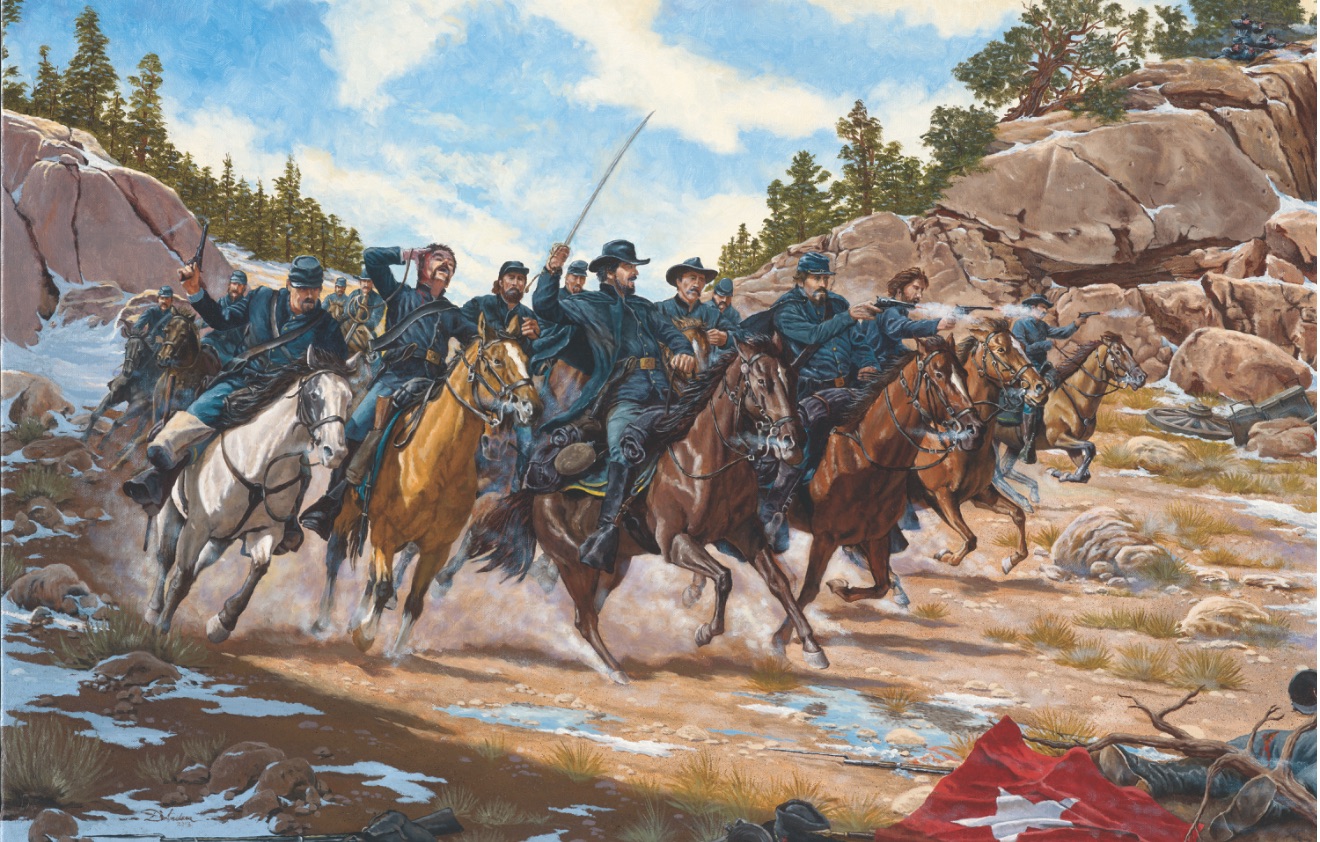
    Painting of the Union cavalry charge at Apache Canyon during the Battle of Glorieta Pass, March 1862, by Domenick D’Andrea.Painting of the Union cavalry charge at Apache Canyon during the Battle of Glorieta Pass, March 1862, by Domenick D’Andrea.

    This narrow, rugged pass in the Sangre de Cristo Mountains was basically the gateway to the rest of the West. Union troops, including a mix of regular soldiers and Colorado volunteers, moved in to stop the Confederate advance. What happened next was a three-day fight, March 26 to 28, that was brutal, confusing, and fought in freezing weather and rocky terrain.
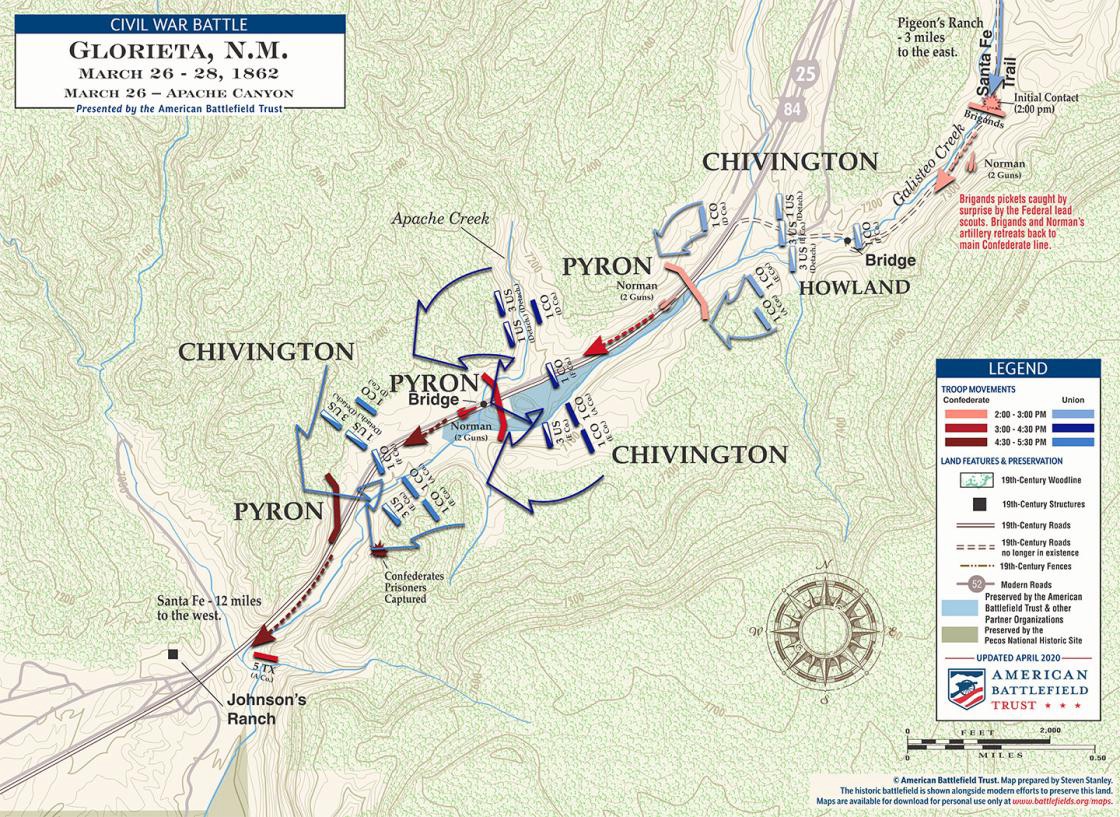
    Battle map showing Union and Confederate troop movements at Apache Canyon on March 26, 1862, during the Battle of Glorieta Pass.Battle map showing Union and Confederate troop movements at Apache Canyon on March 26, 1862, during the Battle of Glorieta Pass.

    The actual fighting was fierce. At one point, hand-to-hand combat broke out in a narrow canyon. Both sides claimed small victories, but it was what happened off the battlefield that really decided things. A group of Union soldiers, led by Major John Chivington, snuck around and found the Confederate supply train. They destroyed it — wagons, food, ammo, everything. Just torched it all.

    With no supplies and hundreds of miles from home, the Confederates had no choice but to retreat. Their whole campaign collapsed.

    Civil War battle map showing troop positions at Pigeon’s Ranch on March 28, 1862, during the final day of the Battle of Glorieta Pass.Civil War battle map showing troop positions at Pigeon’s Ranch on March 28, 1862, during the final day of the Battle of Glorieta Pass.

    That’s why some folks call Glorieta Pass the “Gettysburg of the West.” It stopped the Confederate push. If they’d succeeded, who knows how the map of America might look today?

    It’s a strange little battle; not huge in numbers, but huge in impact. And it’s a good reminder that the Civil War wasn’t just fought in the green fields of Virginia or along the Mississippi River. It reached the deserts, the mountains, and even the far corners of the frontier.

    Sources & Further Reading

    Image Credits

  • May 18, 1863 – The Siege of Vicksburg Begins

    May 18, 1863 – The Siege of Vicksburg Begins

    “Vicksburg is the key!” – Abraham Lincoln

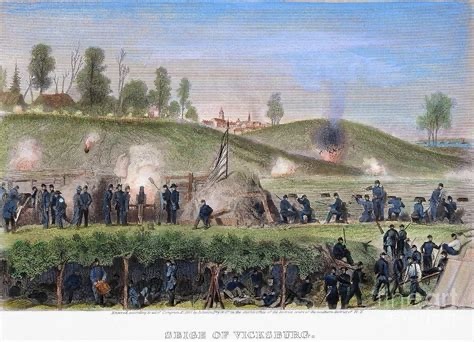
    On this day in 1863, Ulysses S. Grant launched one of the most important campaigns of the entire Civil War, the Siege of Vicksburg.

    Vicksburg wasn’t just another town. It sat on high ground overlooking a key bend in the Mississippi River, meaning whoever held it controlled the river. For the Confederacy, it was a lifeline. For the Union, it was a target. Lincoln even said, “The war can never be brought to a close until that key is in our pocket.”

    The Road to the Siege

    Grant had tried and failed to take Vicksburg for months. Swamps, strong defenses, and bad luck kept blocking his path. But in May 1863, after winning at Champion Hill (May 16) and Big Black River Bridge (May 17), Grant forced Confederate General John C. Pemberton’s army to retreat into the city.

    On May 18, Union forces surrounded Vicksburg and began a siege that would last 47 long days.

    Trapped and Starving

    Life inside the city turned into a nightmare. Grant’s men shelled Vicksburg day and night. Food ran out. Civilians and soldiers alike lived in caves, eating whatever they could find, rats, mules, even shoe leather.

    Grant tried two direct attacks, on May 19 and May 22, but both were beaten back. After that, he settled in and waited. Slowly but surely, the city’s defenses crumbled.

    Finally, on July 4, 1863, the Confederate forces surrendered.

    Why It Mattered

    The fall of Vicksburg was huge. It gave the Union full control of the Mississippi River and cut the Confederacy in two. Just one day after the victory at Gettysburg, this win marked a major turning point in the war.

    It also made Grant a national hero and helped clear the path for him to lead all Union armies later in the war.

    Sources:

    American Battlefield Trust – Siege of Vicksburg National Park Service – Vicksburg Campaign

    The Civil War: A Narrative, Shelby Foote

  • Earl Van Dorn

    Earl Van Dorn

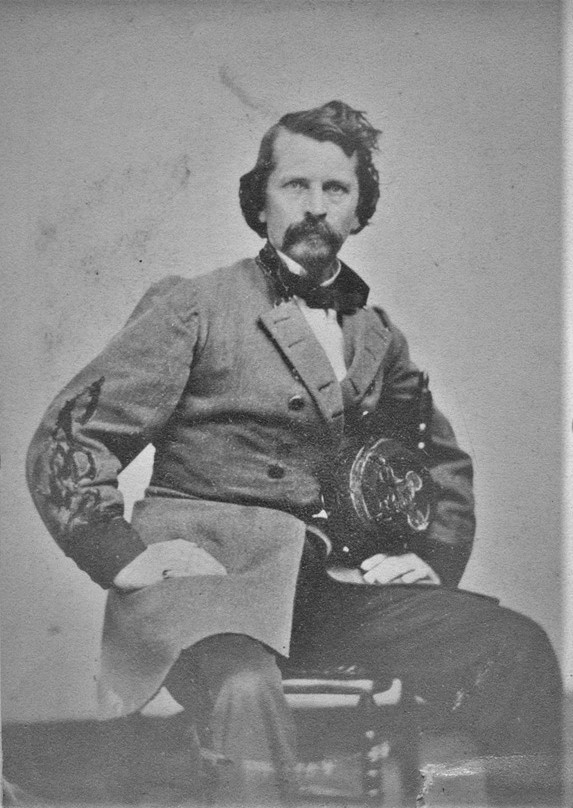
    Earl Van Dorn was one of the most interesting and controversial generals in the Confederate Army during the Civil War. He was brave, charming, and full of energy. But he also made a lot of mistakes, both on the battlefield and in his personal life. His story is part action movie, part soap opera.

    Early Life

    Van Dorn was born in Mississippi in 1820. He came from a wealthy Southern family and went to West Point, the US military academy. He didn’t get the best grades, but he proved himself as a tough and fearless fighter during the Mexican American War and in battles against Native American tribes in Texas.

    People liked him (not everyone on my Instagram poll did though). He was handsome, polite, and popular with women. He dressed well and acted like a Southern gentleman. But some said he cared more about looking good and being liked than thinking things through.

    Losing Battles

    At the start of the Civil War, Earl Van Dorn joined the Confederate army and was quickly made a general. He was given command of a large force in the western part of the country, an area the Confederacy hoped to control to keep key states like Missouri and Arkansas in the fight.

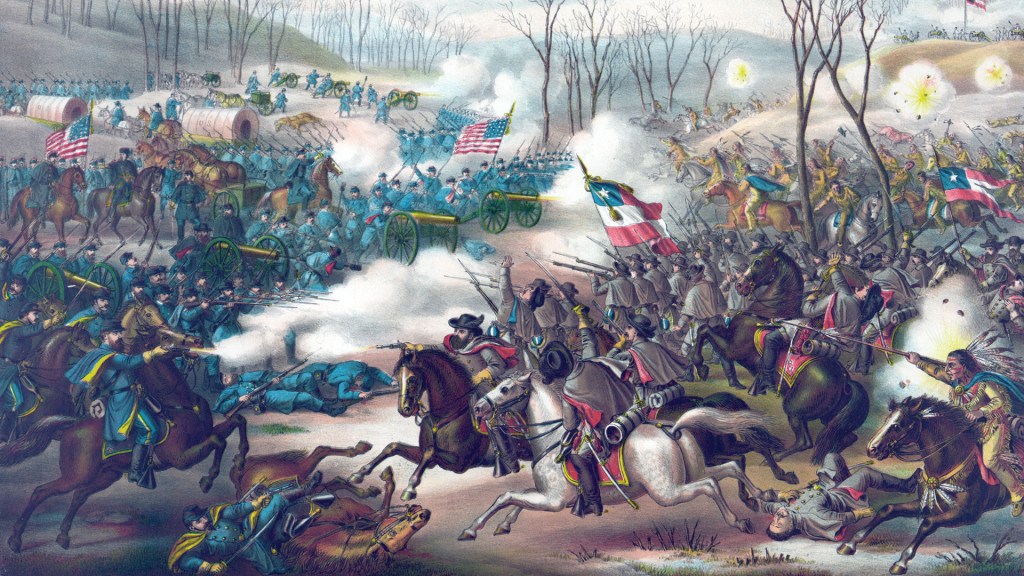
    In March 1862, Van Dorn led Confederate troops at the Battle of Pea Ridge in Arkansas. It was one of the most important battles in the Trans-Mississippi region. Van Dorn tried to surprise the Union army by attacking from behind, but his plan was risky and poorly organized. His troops were tired from marching all night, and their supplies were far behind. During the battle, two key Confederate generals, Ben McCulloch and James McIntosh, were killed early on, causing confusion. The attack fell apart, and the Union army won. It was a major defeat that gave the North firm control of Missouri.

    Later that year, in October 1862, Van Dorn led another major attack but this time at the Battle of Corinth in Mississippi. Hoping to retake the town, he launched a fast and aggressive assault. But again, he failed to prepare properly. The Union forces, led by General Rosecrans, were well-defended. Van Dorn’s men fought hard but were forced to retreat under heavy fire. It was another bloody and costly loss.

    After these back-to-back failures, many Confederate leaders started to doubt whether Van Dorn should be in charge of large armies. His bravery was never questioned, but his planning, leadership, and attention to detail were.

    Cavalry Leader

    Van Dorn was better at leading smaller, fast moving groups of soldiers, especially cavalry which are troops on horseback. In December 1862, he led a surprise attack on the Union supply base at Holly Springs, Mississippi. It was a huge success. His men destroyed tons of supplies and messed up General Grant’s plans to move south. Even Grant later admitted that Van Dorn’s raid caused him serious problems.

    A Scandalous Ending

    But Van Dorn’s biggest problem wasn’t just on the battlefield, it was off of it.

    While staying in Spring Hill, Tennessee, he started an affair with a married woman. Her husband, Dr. George Peters, was furious. One day in May 1863, Peters walked into Van Dorn’s office and shot him in the back of the head. Van Dorn died instantly.

    Dr. Peters was never punished. Some say people looked the other way because Van Dorn had a reputation for being too friendly with other men’s wives.

    What We Remember

    Earl Van Dorn was brave and bold. He knew how to inspire soldiers and take risks. But he also made mistakes that cost lives. And in the end, his personal life caught up with him.

    Some remember him as a hero. Others see him as someone who never quite lived up to his potential.

    Either way, Earl Van Dorn’s story is one of the wildest of the Civil War and it’s one that people still talk about today.

  • First Flag Friday

    First Flag Friday

    While not actually Friday, this post is part of a weekly series honoring Civil War flags and the stories sewn into their fabric. I’m reviving this series after Instagram removed my previous post — this time, it’s staying.

    A Regiment Forged in Fire

    The 26th North Carolina Infantry Regiment was formed in August 1861, largely composed of young men from western North Carolina. By 1863, it had grown into the largest regiment in the Army of Northern Virginia, with nearly 900 men under arms. Their commander, Colonel Henry King Burgwyn Jr., was just 21 years old, a boy in age and was known as the “Boy Colonel.” As someone who turned 21 in the Army I could not imagine leading 900 men when I could hardly lead myself…

    The regiment’s legacy would be defined by a single brutal day: July 1, 1863, on the outskirts of Gettysburg, Pennsylvania, you have probably heard of it and if you have not you must be looking up color combos for your wedding (Blue and Gray get it…).

    Gettysburg: The Slaughter at McPherson’s Ridge

    As the Battle of Gettysburg opened, the 26th North Carolina advanced as part of General Heth’s division, crashing into Union troops of the famed Iron Brigade, specifically the 24th Michigan Infantry, one of the toughest and best equipped regiments in the Union Army.

    The two sides fought at point-blank range through the woods and open fields of McPherson’s Ridge, exchanging fire in a near-suicidal contest of will. Muskets overheated. Trees splintered. Men collapsed in rows.

    Colonel Burgwyn, leading from the front, personally took the regimental colors after multiple color bearers had fallen. He was struck in the side and died shortly after, uttering only, “Tell my mother I die with my face to the enemy.” Honestly, some of the most incredible last words you could imagine.

    Casualties That Shocked Both Sides

    By the time the smoke cleared, the 26th had lost 588 men out of roughly 850 engaged—more than 70% casualties in a single day, the highest regimental losses suffered by either side at Gettysburg. Over 13 color bearers were shot down while carrying the flag.

    The 24th Michigan, though victorious on the field, suffered nearly 400 casualties themselves. The fight between the two regiments was so intense that it’s still cited in military studies of small unit combat.

    Two days later, the remnants of the 26th participated in Pickett’s Charge, advancing again under fire. Only around 80 men answered roll call after the battle ended.

    The Flag That Would Not Fall

    The regiment’s battle flag, a Confederate standard, was pierced by dozens of bullets, soaked in blood and gunpowder, and nearly captured several times. After the war, it was returned to North Carolina and has since become one of the most iconic Confederate flags in existence. Not because of what it symbolized politically, but because of the story it tells about sacrifice, command, and loss. (Can’t be banned here Instagram HA!)

    Legacy and Memory

    The 26th North Carolina is memorialized today with monuments at Gettysburg and in North Carolina. Their story is often cited not to glorify war, but to illustrate the devastating human cost of loyalty, leadership, and civil conflict.

    The flag of the 26th North Carolina still exists. It has been preserved and displayed, most notably in Raleigh during special exhibitions. The blood on it is real. The holes are real. The deaths were real.

    Sources & Further Reading

  • Welcome to Blue vs Gray

    Welcome to Blue vs Gray

    Are you the kind of person who can’t stop reading about the Civil War? Someone who loves digging into the stories, the strategies, and the people who lived through it all? If you’re passionate about learning and always looking to understand the past a little better, you’re in the right place.

    Blue vs Gray is something I started because I’ve become obsessed with this part of history. After seeing how often Civil War content gets removed or restricted on Instagram, I wanted a way to keep the conversation going without filters. It’s brutal, complex, sometimes unbelievable… but always worth learning about. This blog is just my way of sharing that love for Civil War history, one post at a time.

    You’ll find all kinds of stuff here:

    • Stories from the front lines
    • Flags and uniforms
    • Crazy facts you didn’t learn in school
    • Profiles of soldiers and leaders (famous and forgotten)
    • The occasional meme or fun take, because history doesn’t have to be boring

    I’m not a professor. I am not a writer (you will be able to tell), but I am someone who cares about keeping this history alive and making it accessible. If you learn something new, or just find something cool to share, that’s a win in my book.

    Thanks for stopping by and hope you’ll stick around.

    — Tyler
    Creator of Blue vs Gray